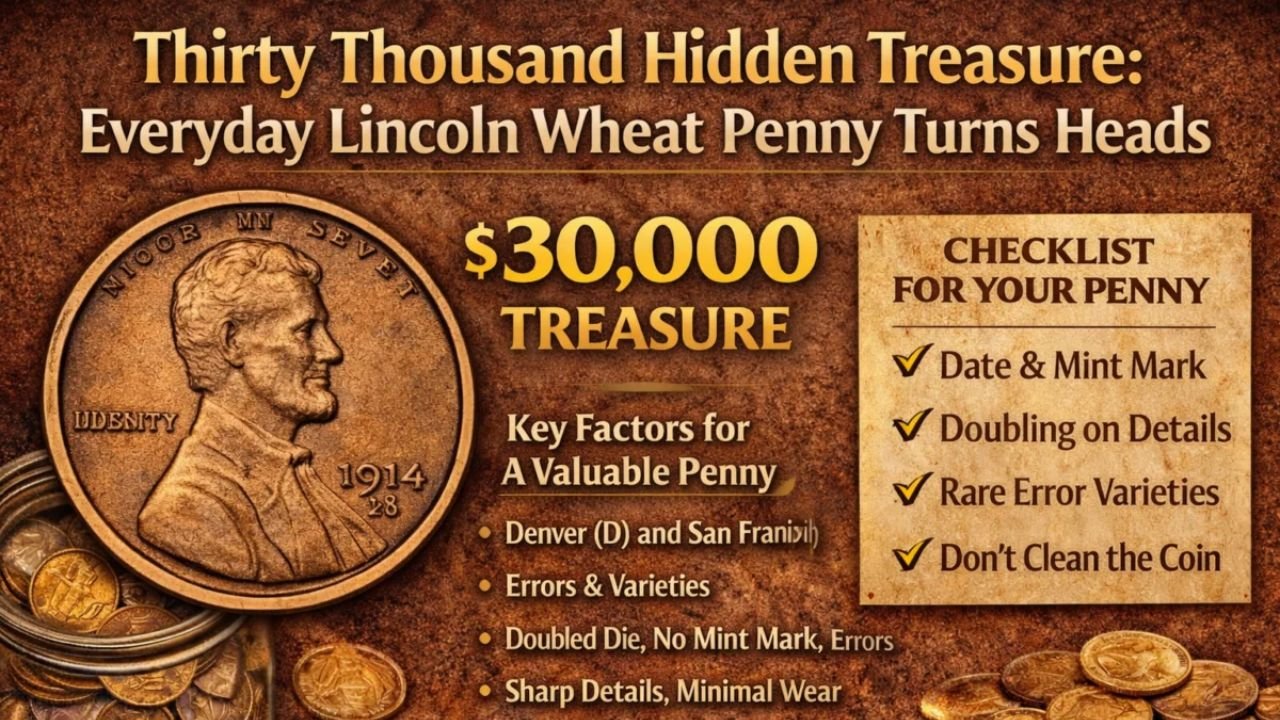
At first glance, a Lincoln Wheat Penny seems ordinary—small, copper-colored, and easily overlooked. Yet, for collectors, these coins can represent astonishing value, with some examples fetching as much as $30,000 or more. Even more surprising, these hidden treasures occasionally turn up in everyday places: old coin jars, inherited collections, or loose change tucked away for decades.
Why Lincoln Wheat Pennies Are So Special
The Lincoln Wheat Penny, minted from 1909 to 1958, features two wheat stalks on the reverse side. Over nearly half a century, these coins circulated during pivotal moments in U.S. history, including World War I, the Great Depression, and World War II.

Age alone isn’t enough to make a penny valuable. Scarcity, minting variations, and occasional errors contribute to their allure. Certain Wheat Pennies are prized not just for their copper content, but for their historical significance and rarity in high-grade condition.
Understanding the $30,000 Wheat Penny
A Lincoln Wheat Penny valued at around $30,000 is rarely random. These coins typically belong to rare years, mint marks, or error varieties and are preserved in exceptional condition. Notable examples include:
- 1914-D Lincoln Wheat Penny: A scarce Denver mint issue in high grade
- 1922 No D Mint Error: Missing mint mark varieties
- 1931-S: Limited San Francisco production in near-mint condition
- 1955 Doubled Die Obverse: Pronounced doubling on the date and lettering
- Early Wheat Pennies (1909–1915): High-grade early issues can reach substantial sums
Even slightly worn examples have some collector interest, but pristine or near-perfect coins are the ones that drive high auction prices.
What Makes a Penny Valuable
Several factors determine whether a Wheat Penny is a modest cent or a valuable collectible:
- Mint Mark: Coins from Denver (D) or San Francisco (S) are often rarer than Philadelphia issues.
- Errors and Varieties: Doubled dies, missing mint marks, off-center strikes, or weak dies can dramatically increase value.
- Condition: Sharp details, minimal wear, and original surfaces command the highest prices.
- Historical Rarity: Lower mintage years and coins produced during wartime shortages are particularly sought after.
How Rare Pennies Stay Hidden
Many people unknowingly spend valuable Wheat Pennies, unaware of their potential worth. Others inherit coin collections without recognizing their contents. Because Wheat Pennies appear similar to modern cents at a glance, rare examples can remain unnoticed for decades.
Collectors often find surprises in:
- Old coin jars and piggy banks
- Estate sales and auctions
- Flea markets and antique shops
- Bank rolls, especially from long-forgotten deposits
How to Examine Your Wheat Pennies
If you come across a Wheat Penny, careful inspection is crucial:
- Check the date and mint mark
- Look for doubling on letters or numbers
- Compare it to verified images of rare varieties
- Avoid cleaning the coin, as this reduces collector value
- Weigh it if necessary to confirm the metal composition
If anything seems unusual, professional authentication is the next step. Grading services and reputable coin dealers can verify authenticity, assign a standardized grade, and help determine market value.
What to Do If You Find a Valuable Penny
- Handle with care: Hold the coin by its edges.
- Protect it: Store in a safe, protective holder.
- Seek professional verification: Certified dealers and grading services add credibility.
- Avoid rushing to sell: Understanding true value ensures you don’t undervalue the coin.
Many high-value pennies remain underappreciated simply because their owners are unaware of their significance.
The Excitement of Discovery
Finding a valuable Lincoln Wheat Penny in ordinary change is rare but entirely possible. Each discovery combines historical intrigue, rarity, and tangible financial value. Even coins that look ordinary at first glance can hold life-changing potential for attentive collectors.
Final Thoughts
The notion that a $30,000 treasure could be hiding in your spare change isn’t a myth—it’s a documented reality. Lincoln Wheat Pennies continue to surprise both casual finders and seasoned collectors. The next time you encounter one of these humble coins, take a closer look. With the right date, mint mark, and condition, a seemingly ordinary penny could become an extraordinary discovery, hiding in plain sight.
Disclaimer: Coin values fluctuate based on condition, rarity, and market demand. Professional authentication and evaluation are strongly recommended before buying or selling rare coins.