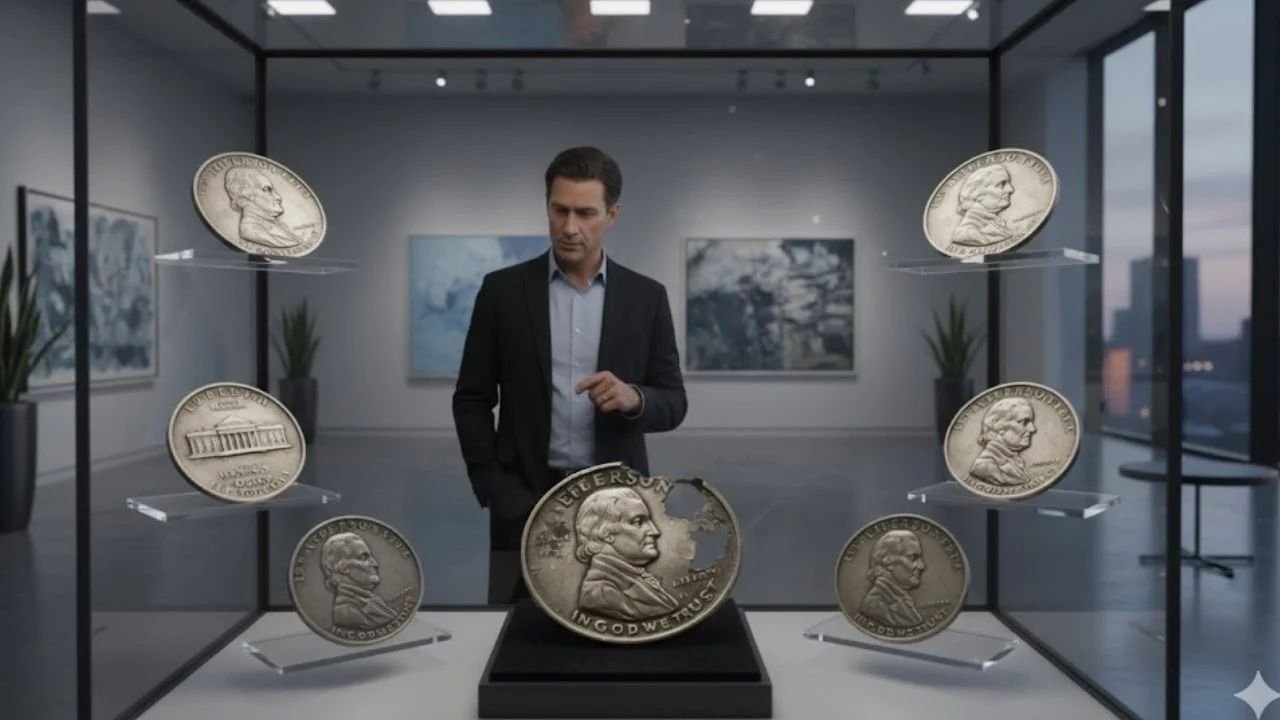
Coins that show signs of wear, heat damage, or physical stress are often dismissed as worthless, yet numismatic value is not always tied to pristine condition. A Jefferson nickel that appeared burnt, bent, and faded recently proved this point, transforming from overlooked change into a historically significant and financially valuable collectible. Its story highlights how history, rarity, and verification can outweigh surface imperfections.
The Wartime Jefferson Nickel: A Historical Overview
Between 1942 and 1945, the United States faced critical nickel shortages during World War II. Nickel metal was required for military production, so the U.S. Mint modified the five-cent coin’s composition. Wartime Jefferson nickels contained 56% copper, 35% silver, and 9% manganese, distinguishing them from standard issues.
Key identifiers include:
| Feature | Detail |
|---|---|
| Coin Type | Jefferson Nickel |
| Special Issue Years | 1942–1945 |
| Composition | 56% Copper, 35% Silver, 9% Manganese |
| Mint Mark Placement | Large P, D, or S above Monticello |
| Common Name | Wartime Silver Nickel |
| Collectible Errors | Off-center strikes, planchet errors, strike-throughs |
| Damaged Coin Value Range | $1–$10 for silver content; $50–$500+ for verified errors |
These coins were minted in large quantities, but true wartime examples in collectible condition—especially with notable errors—remain scarce.
Looking Beyond Damage
The nickel in question appeared almost unrecognizable at first. Jefferson’s portrait was softened, the Monticello building on the reverse was barely discernible, and the surface bore marks of intense heat and bending. Despite these challenges, careful examination revealed subtle clues:
- Mint mark placement above Monticello
- Distinct strike characteristics indicating wartime origin
- Remaining silver tones under discoloration
In numismatics, such details can be far more important than overall aesthetics, proving that a coin’s story and authenticity can outweigh visible flaws.
Damage as Part of a Coin’s Journey
While wear and damage typically reduce a coin’s market value, exceptions exist. Coins with historical significance, rare errors, or unusual characteristics retain collectible interest even after extreme damage. In some cases, damage from fire, pressure, or environmental factors becomes part of the documented provenance, enhancing the narrative for collectors.
Why Wartime Nickels Remain Coveted
Wartime Jefferson nickels are prized for more than their silver content. Collectors value them as tangible links to a pivotal moment in American history, representing resourcefulness and national sacrifice during World War II. Even heavily circulated or damaged examples carry intrinsic value, while error coins from this era can command high prices regardless of condition.
The blend of historical context, metal content, and scarcity ensures continued demand among collectors worldwide.
Identifying and Preserving Value
For those who encounter potentially valuable wartime nickels, the following steps are critical:
- Handle with care: Avoid touching surfaces; hold coins by their edges.
- Document the coin: Take clear photographs of both sides and note the discovery location.
- Avoid cleaning: Cleaning can irreversibly reduce value.
- Seek professional evaluation: Certified grading services such as PCGS or NGC can verify authenticity and assign a standardized grade.
Even coins that appear ruined can fetch prices ranging from $50 to several hundred dollars once properly authenticated.
Real-World Example
A damaged Jefferson nickel, long overlooked in a jar of spare change, was eventually examined by a careful collector. Despite intense heat marks and bending, the mint mark above Monticello and other subtle strike features confirmed it as a wartime silver nickel. After professional grading, the coin sold for a substantial sum, far exceeding initial expectations.
The Excitement of Numismatic Discovery
Stories like this underscore the excitement inherent in coin collecting. Valuable pieces of history can appear in the most unassuming forms, waiting for a keen eye to uncover them. A burnt, bent, or faded coin may hold secrets of national significance, offering both historical insight and financial opportunity.
Final Verdict
A Jefferson nickel that looks damaged or worn is not automatically worthless. When historical context, identifiable features, and rarity converge, even a battered coin can become a prized collectible. This wartime nickel illustrates that value in numismatics is not always about appearance—it’s about what remains verifiable and historically significant.
Disclaimer: Coin values fluctuate based on silver prices, collector demand, authentication, and market conditions. The ranges provided are estimates. Professional evaluation is strongly recommended before buying or selling collectible coins.