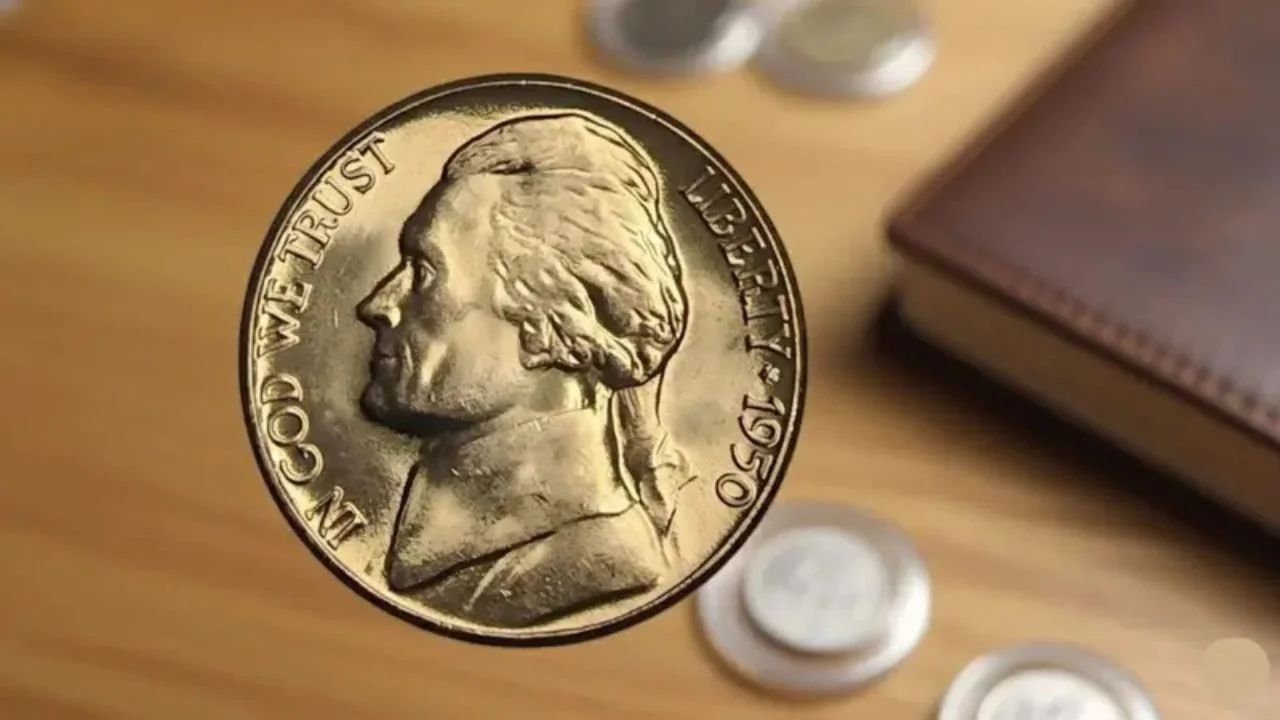
At first glance, the 1950-D Jefferson Nickel appears to be an ordinary five-cent coin. Yet behind its simple design lies one of the most fascinating stories in U.S. numismatics. Often called the “nickel that vanished,” this small coin has achieved legendary status among collectors. Exceptional examples have commanded staggering prices, and enthusiasts continue to search for hidden survivors in collections, drawers, and forgotten coin jars.
Why the 1950-D Jefferson Nickel Is So Special
The coin’s fame stems from its exceptionally low mintage. In 1950, the Denver Mint struck just 2.6 million nickels—making it the lowest-mintage regular-issue Jefferson nickel ever produced.

As collectors realized the scarcity, a remarkable chain of events unfolded:
- Immediate hoarding: Many coins were saved as soon as they left the mint.
- Limited circulation: A significant portion never entered everyday commerce.
- Hidden away: Countless nickels ended up in albums, drawers, and estate collections.
This scarcity in circulation gave rise to the notion that the coin had “vanished,” increasing its allure and collector demand.
The Role of Condition: Why Some Are Worth Fortunes
While most 1950-D nickels found today are worn and modestly valued, a tiny fraction survived in nearly perfect condition. These elite coins are what drive the nickel’s legendary market status.

Collectors pay premiums for coins with:
- Sharp, untouched details and strong strike quality
- Original mint luster and clean surfaces
- Clear, uninterrupted steps on Monticello’s base (“Full Steps”)
Full Steps examples are exceptionally rare, and when they appear, they immediately become centerpiece coins for high-end collections.
Can a 1950-D Nickel Really Be Worth Millions?
Yes—but only under extraordinary circumstances.
- Circulated coins: Typically worth a few dollars.
- Uncirculated coins: Can reach hundreds or even thousands of dollars.
- Top-tier Full Steps examples: Record-setting transactions have reportedly reached seven-figure values.
Coins at this level are usually professionally graded, one-of-a-kind in quality, and fiercely contested by elite collectors and investors. While million-dollar examples are extremely rare, they exist—and they fuel the ongoing hunt.
How to Identify a 1950-D Jefferson Nickel
If you encounter a 1950 nickel, check for the following details:
- Date: 1950 on the obverse.
- Mint Mark: A small “D” on the reverse, to the right of Monticello.
- Condition: Less wear dramatically increases value.
- Steps on Monticello: Fully visible, unbroken steps can elevate a coin to top-tier status.
Collector tip: Never clean the coin. Cleaning can instantly destroy collector value and diminish its market potential.
Where Collectors Are Still Finding Them
Despite decades of searching, new 1950-D nickels continue to surface. Common sources include:
- Old family coin collections and inherited albums
- Estate sales and forgotten coin folders
- Coin jars and loose change stored for decades
- Coin roll hunting at banks and thrift shops
Exciting finds often emerge when coins untouched for 50–60 years are finally examined, reminding collectors that even common-looking coins can hide extraordinary value.
A Five-Cent Coin With a Legendary Legacy
The 1950-D Jefferson Nickel demonstrates that rarity isn’t always about age—it’s about survival. A coin that many would overlook has become one of the most discussed and coveted nickels in U.S. history. Its story continues to inspire collectors to search relentlessly for the next great find.
Before discarding or spending an old nickel, examine it closely. You may be holding a piece of American history—and possibly a hidden fortune.