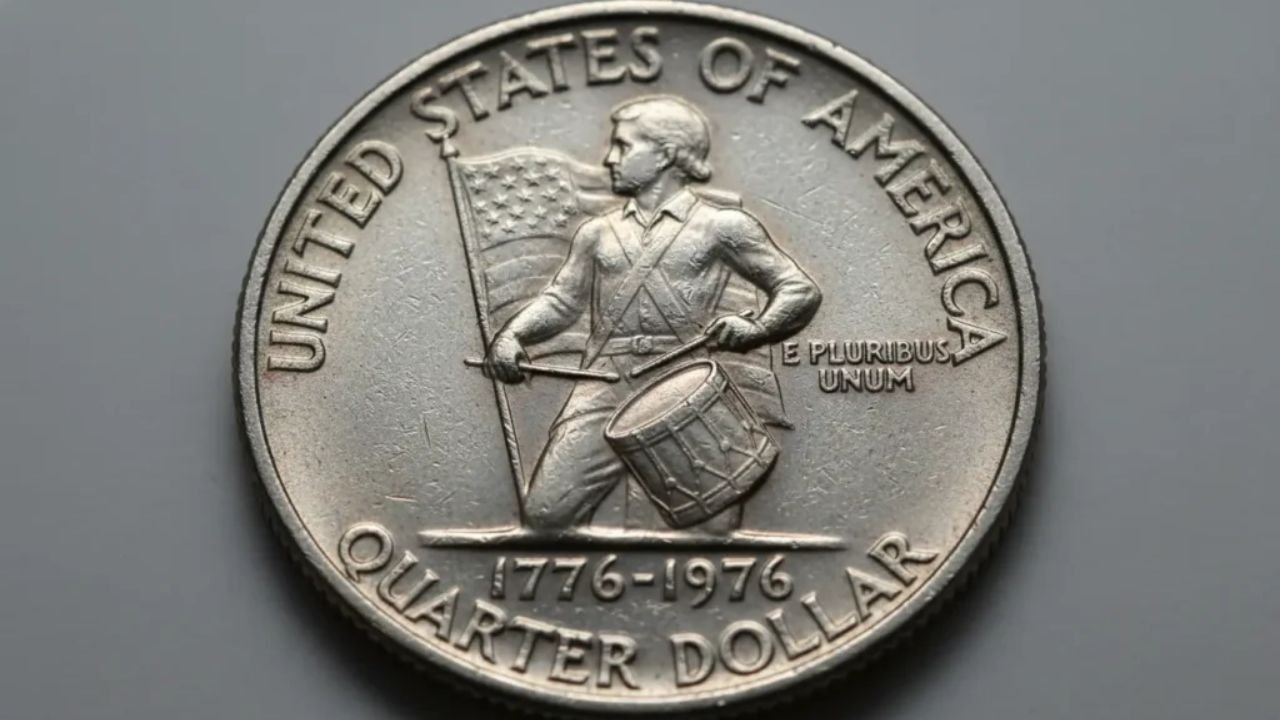
The 1976 Drummer Boy quarter has captured the imagination of coin collectors for decades. Celebrating America’s Bicentennial, this quarter features a colonial drummer on the reverse and the dual date 1776–1976. While most examples are worth only face value, a rare few have reached astonishing auction prices. One remarkable coin recently sold for $450,000, highlighting how errors, grade, rarity, and provenance can transform a modern coin into a high-value collectible.
Why This 1976 Drummer Boy Quarter Sold for $450,000
Several key factors combined to produce this record-breaking sale. The coin’s unusual minting error, exceptional grade, verified provenance, and strong auction demand each contributed to its extraordinary market value. Understanding these elements helps explain why some modern coins achieve such impressive prices.
1. Minting Error or Unique Variety

Minting errors are often the primary driver of high-value coins. In the case of the 1976 Drummer Boy quarter, the reverse design—featuring the drummer and torch—was the focal point for a dramatic error that made this coin stand out.
- Common valuable errors: Double strikes, off-center strikes, wrong planchet strikes, and major die breaks.
- Impact on value: Coins with visually striking errors are highly sought after and can outperform even rare dates in standard condition.
- Collector appeal: Errors add uniqueness and intrigue, giving each coin a story that collectors prize.
A clearly visible, dramatic minting mistake can instantly elevate a coin’s market profile, turning a common date into a legendary collectible.
2. Grade and Condition
Even for modern coins, condition is critical. The 1976 Drummer Boy quarter that sold for $450,000 was graded by a respected third-party service, confirming its exceptional quality.
- High-grade standards: MS68 or higher for uncirculated coins, PR70 for proof examples, and deep cameo contrast coins command top premiums.
- Professional grading: Buyers rely on certification from PCGS, NGC, or other trusted graders to ensure authenticity and condition.
- Value multiplier: When a rare error coincides with a top-tier grade, collectors bid aggressively, often driving prices exponentially higher than ungraded or lower-grade coins.

Top-grade condition ensures both visual appeal and long-term investment potential, making such coins extremely desirable.
3. Rarity and Provenance
Rarity extends beyond sheer numbers; it includes the survival of high-quality examples and their historical context. Provenance—the documented history of a coin’s ownership—adds credibility and desirability.
- Limited surviving examples: Even with errors, only a few coins exist in flawless condition.
- Provenance matters: Coins from well-known collections or linked to notable discoveries gain prestige.
- Market confidence: Provenance provides assurance to collectors, making high-stakes bidding more likely.
A coin with both rarity and a clear lineage becomes a must-have for serious collectors and investors.
4. Auction Dynamics and Collector Demand
High-value coin sales are also influenced by market dynamics. Strong competition among collectors at reputable auctions can escalate prices dramatically.
- Global demand: Interest from collectors worldwide increases bidding intensity.
- Competitive environment: Limited availability and documented errors drive enthusiasm.
- Historical appeal: Bicentennial quarters, with their unique design and national significance, naturally attract attention.
In this case, the combination of error, grade, rarity, and auction excitement created a perfect storm, pushing the sale to $450,000.
5. Lessons for Modern Coin Collectors
The story of this 1976 Drummer Boy quarter offers several takeaways for collectors:
- Examine coins carefully: Look for unusual features, errors, or unique varieties.
- Prioritize condition: High-grade coins retain and amplify value.
- Document provenance: Keep records of purchase, previous ownership, and grading certificates.
- Stay informed: Understanding the market and rare examples helps identify potential high-value finds.
Even coins that appear common in circulation may hold hidden potential for those who know what to look for.
Final Thoughts
The $450,000 sale of a 1976 Drummer Boy quarter demonstrates that modern coins can reach extraordinary values when rarity, condition, error, and provenance align. Collectors seeking high-value coins must focus on quality, authenticity, and market knowledge.
Owning a rare Bicentennial quarter is not just about financial gain—it’s about preserving a piece of American history. Each coin tells a story, from its design and minting to the hands it has passed through over decades. For modern collectors, the thrill of discovering a hidden treasure in everyday circulation remains as compelling as ever, proving that even contemporary coins can achieve legendary status.