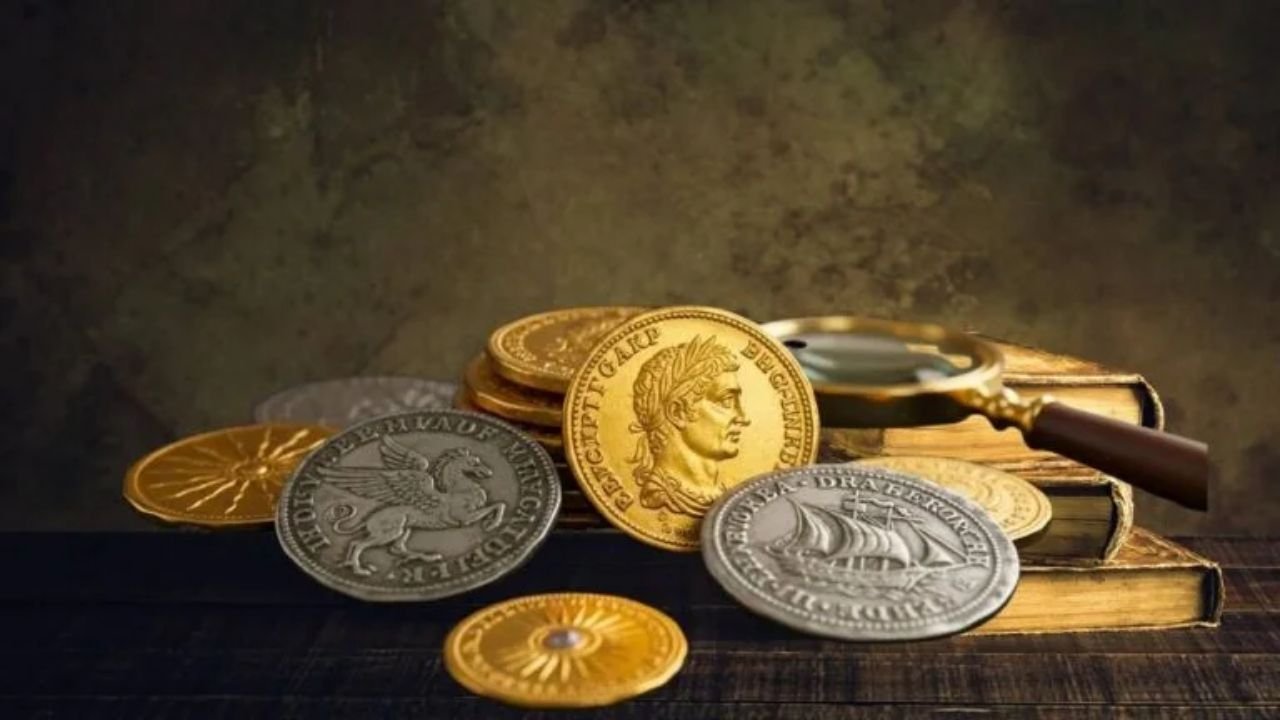
Rare coin collecting is a fascinating intersection of history, scarcity, and long-term financial potential. While most coins remain modest in value, a select few have achieved legendary status, commanding millions at auction due to extreme rarity, historical significance, and strong collector demand. For serious collectors and investors, understanding which coins hold life-changing value can transform a collection into a financial treasure.
Legendary Million-Dollar Coins: A Snapshot
| Coin Name | Country | Approximate Value Range | Primary Reason for Value |
|---|---|---|---|
| 1933 Saint-Gaudens Double Eagle | USA | $10M–$20M | Legal rarity, gold content |
| 1794 Flowing Hair Dollar | USA | $5M–$10M | First official U.S. silver dollar |
| 1804 Silver Dollar (Class I) | USA | $3M–$7M | Diplomatic presentation coin |
| 1913 Liberty Head Nickel | USA | $3M–$6M | Only five known examples |
| 1787 Brasher Doubloon | USA | $7M+ | Pre–U.S. Mint gold issue |
| 1822 Capped Bust Half Eagle | USA | $5M+ | Extremely low survival |
| 1894-S Barber Dime | USA | $1M–$2M | Tiny mintage |
| 1870-S Seated Liberty Dollar | USA | $1M–$3M | Scarce mint issue |
| 1937-D Three-Legged Buffalo Nickel | USA | $500K–$1M+ | Famous mint error |
| Early Draped Bust Silver Coins | USA | $1M+ | Early American coinage |
These coins demonstrate how scarcity, provenance, and historical relevance combine to create exceptional value.
Why Certain Coins Reach Million-Dollar Status
Several key factors elevate coins to millionaire status:
- Extreme Rarity: Most have only a handful of verified examples in existence.
- Historical Significance: Coins linked to major U.S. minting events or legal anomalies gain extraordinary interest.
- Condition and Grade: Top-graded specimens can dramatically outperform lower-grade counterparts.
- Provenance: Documented ownership history adds credibility and boosts auction performance.
Iconic Million-Dollar Coins
The 1933 Saint-Gaudens Double Eagle
One of the most famous coins globally, nearly all 1933 Double Eagles were melted, leaving only a few legally released examples. One of these gold coins sold for nearly $19 million, cementing its status as a benchmark for rare U.S. coin values.
The 1794 Flowing Hair Dollar
Considered the first official U.S. silver dollar, surviving examples are exceedingly rare. Exceptional specimens have fetched around $10 million, making it a prized centerpiece for collectors.
The 1804 Silver Dollar (Class I)

Though dated 1804, most were struck decades later for diplomatic purposes. Its mystery, low survival numbers, and collectible allure make the Class I variety highly sought after.
The 1913 Liberty Head Nickel
With only five known examples, this unauthorized coin generates global excitement each time it appears at auction, often achieving multi-million-dollar results.
The 1787 Brasher Doubloon
Minted privately by goldsmith Ephraim Brasher before the U.S. Mint’s establishment, this coin is revered for its rarity, gold content, and historical significance.
Other Notable Million-Dollar U.S. Coins

The 1822 Capped Bust Half Eagle, the 1894-S Barber Dime, and the 1870-S Seated Liberty Dollar are celebrated for their tiny mintages and limited survival. Error coins, like the 1937-D Three-Legged Buffalo Nickel, show how minting mistakes can transform a coin into an icon of numismatic lore.
Authentication: Essential for High-Value Coins
Verification is critical for coins of this caliber. Third-party grading services, including PCGS and NGC, provide professional authentication, grading, and encapsulation. Provenance research, auction history, and prior ownership enhance credibility. For extraordinary pieces, consulting museum experts or numismatic scholars may be necessary.
Selling Million-Dollar Coins Safely
Major rarities are typically sold through elite auction houses or high-end dealers. Multiple professional appraisals help establish realistic expectations. Secure storage, proper insurance, and complete documentation are essential to protect both the seller and the buyer during high-value transactions.
Real-World Collector Insight
In one notable instance, an estate discovery included a high-grade Buffalo nickel that turned out to be the rare three-legged variety. After professional grading and authentication, it exceeded auction estimates, highlighting the importance of verification, documentation, and presentation in realizing maximum value.
Final Thoughts
Rare coin collecting offers more than just historical insight—it can also provide substantial financial rewards. Coins like the 1933 Double Eagle, 1794 Flowing Hair Dollar, and 1913 Liberty Head Nickel illustrate how rarity, condition, and provenance converge to create life-changing value. For collectors who study, authenticate, and strategically acquire coins, even a single discovery can become a once-in-a-lifetime opportunity to enter the rarefied world of millionaire coins.
The pursuit of these legendary coins blends history, art, and financial foresight, proving that in numismatics, small objects can hold monumental significance.